Private equity ownership is more than a financial position. It’s a responsibility.
When you hold a controlling stake in a company, you’re not just managing assets—you’re shaping culture, influencing livelihoods, and determining the long-term direction of a business. The question isn’t whether you have influence. The question is how you choose to steward it.
At TKW Capital, we believe faith-driven private equity isn’t a contradiction. It’s a more sustainable approach to long-term business growth. Many private equity owners and operators feel the same tension—balancing conventional profit optimization with a deeper sense of purpose and responsibility.
So what does Kingdom-driven business growth actually look like in practice? Let’s break it down.
Why Kingdom-Driven Growth Matters in Private Equity Today
The private equity landscape has changed significantly over the past several decades. In earlier eras, returns were often driven by financial engineering—leverage, restructuring, and short-term optimization.
Today, studies show that 60–70% of private equity returns come from operational improvement and business performance, not leverage alone.
That shift creates opportunity.
When value creation depends on how well a company is operated—rather than how aggressively its balance sheet is structured—private equity owners have the ability to build businesses that serve employees, strengthen communities, and create durable economic value.
Kingdom-driven growth doesn’t reject financial discipline. It expands the definition of returns to include long-term impact, stewardship, and legacy alongside profitability. This is where faith-based investing and private equity leadership converge.
The Foundation: Values That Guide Every Investment Decision
You can’t build a stewardship-driven portfolio without clarity around values. Before growth strategies, acquisitions, or exit planning, private equity owners must establish the principles that guide decision-making.
At the core of values-based private equity, we consistently see:
- Service – prioritizing employees, customers, and communities over ego
- Humility – recognizing ownership as stewardship, not entitlement
- Integrity – doing what’s right, even when it’s costly
- Excellence – honoring God through high-quality work and operations
- Love – treating every stakeholder with dignity
- Diversity – valuing the unique strengths each person brings
These values aren’t marketing language. They should shape investment selection, deal structures, governance, leadership decisions, and long-term ownership strategy. When values are clear, complexity becomes easier to navigate.
Stewardship Over Ownership: A Mindset Shift for Private Equity Owners
Here’s the mindset shift that changes everything:
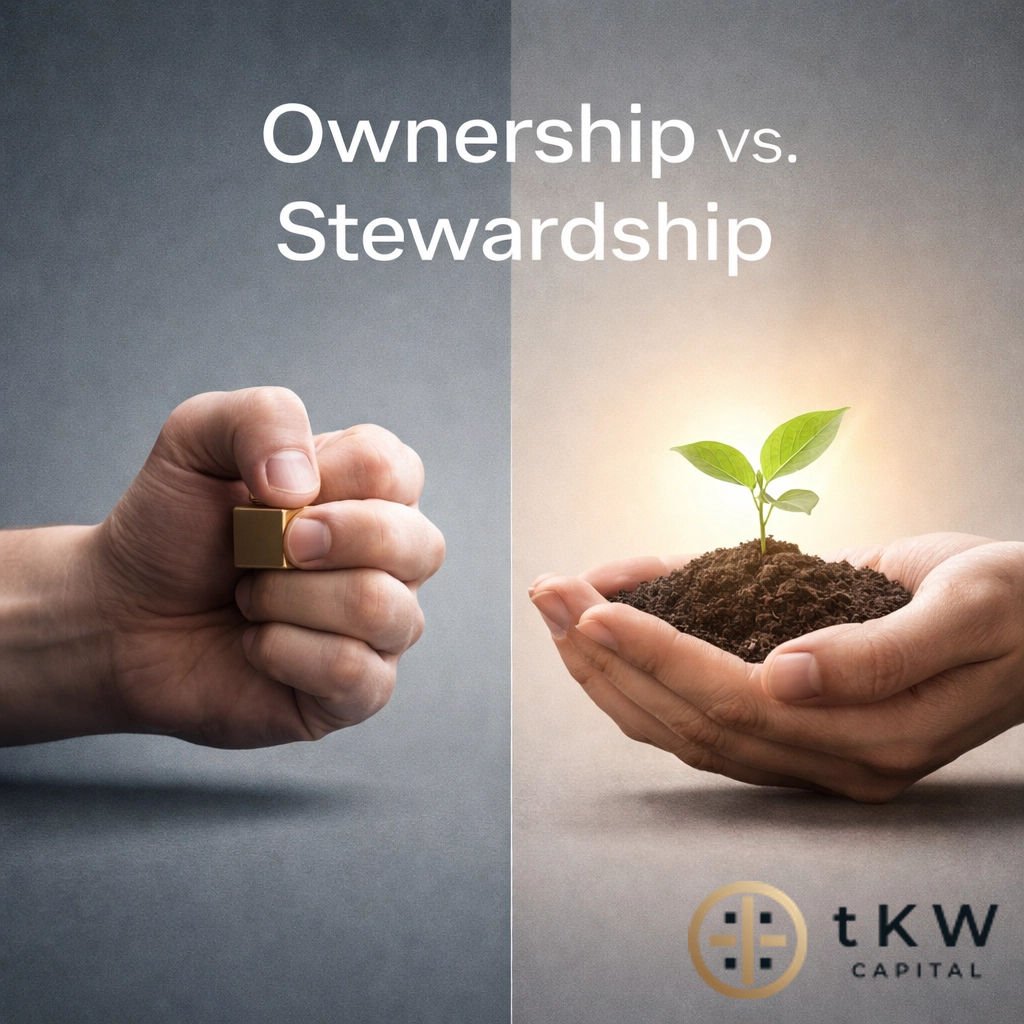
You don’t truly own portfolio companies—you steward them.
Ownership implies absolute authority. Stewardship recognizes that capital, opportunity, and influence are entrusted for a season. That perspective fundamentally changes how private equity owners approach growth.
Instead of asking, “How do we extract maximum value?” stewardship asks:
- How do we leave this business stronger than we found it?
- How do we create opportunities for employees to flourish?
- How do we build something that serves future generations?
This isn’t soft thinking. It’s often better business. Companies built on stewardship principles tend to experience lower turnover, stronger leadership pipelines, healthier cultures, and more sustainable growth—all drivers of long-term value creation.
Practical Ways to Implement Kingdom Principles in Private Equity
Faith-driven private equity must be operational, not theoretical. Here are practical ways Kingdom principles show up in execution.
1. Invest Intentionally in Employee Well-Being
How a company treats its people is one of the clearest indicators of stewardship. Many faith-aligned operators implement:
- Chaplaincy or counseling resources
- Mental health and wellness support
- Family-friendly workplace policies
- Values-based leadership development
These initiatives reinforce that employees are contributors with dignity—not costs to be minimized.
2. Democratize Wealth Creation
Traditional private equity often concentrates upside among a narrow group. Kingdom-driven ownership asks whether more people can share in the value they help create.
Broad-based equity participation aligns incentives, strengthens retention, and reflects a biblical view of shared flourishing.
3. Commit to Operational Excellence
Operational improvement—not financial engineering—is where stewardship shows up most clearly.
Faith-driven private equity owners invest in:
- Scalable systems and processes
- Leadership development at every level
- Customer experience and product quality
- Long-term operational resilience
Excellence isn’t just about margins—it’s about honoring responsibility through disciplined execution.
4. Practice Generosity as an Operating Principle
Many stewardship-minded firms build generosity into their business model from the start. This may include:
- Giving from management fees or carried interest
- Supporting community initiatives through portfolio companies
- Encouraging service and local engagement
Generosity isn’t a reward after success—it’s a posture maintained throughout the journey.

Selecting the Right Investments
Not every opportunity aligns with Kingdom-driven private equity. Disciplined stewardship requires saying no.
Faith-aligned investors look for businesses that:
- Create genuine value in their industries
- Offer long-term operational upside
- Align with ethical and biblical standards
- Allow for healthy workplace culture
- Enable positive community impact
Sometimes the most faithful decision is walking away from a profitable deal that requires compromise.
The Long Game: Building a Generational Legacy
What ultimately separates Kingdom-driven private equity from conventional approaches is time horizon.
While many firms operate on 3–7 year exit cycles, stewardship-minded owners think generationally. They ask:
- What kind of leaders are we developing?
- What kind of companies are we building?
- What example are we setting for those who follow?
Shifting from “How do we maximize this exit?” to “What legacy are we leaving?” changes how growth decisions are made. Often, those long-term decisions lead to stronger businesses—and more durable returns.

Your Next Step
If you’re a private equity owner or operator wrestling with the tension between profit and purpose, you don’t have to choose one over the other.
Kingdom-driven business growth isn’t about lowering standards. It’s about stewarding influence intentionally—financially, operationally, and relationally.
At TKW Capital, we’re committed to proving that faith and finance aren’t just compatible—they’re meant to work together.
If you’re exploring what stewardship-driven private equity could look like for your portfolio, let’s talk.