
An honest look at the customer, capital, leadership, and alignment issues we underestimated in one acquisition.
There’s a point in almost every acquisition when you realize the business you bought isn’t exactly the business you thought you were buying. We’re about nine months into one of those situations right now. We knew going into this acquisition that there was work to do, but it has turned into a much bigger turnaround than we expected, and we’ve had to make some difficult decisions along the way.
At this point, we have a 90-day plan in place to determine whether we continue investing in the business and working through the turnaround or ultimately decide to shut it down. That’s not a decision we take lightly. There are ten employees and their families affected by what happens next, along with the history and legacy of a business that was built long before we became involved.
I don’t know yet how this story is going to end, but I do have the benefit of nine months inside the business now. Looking back, there are things we missed during diligence, assumptions we should have challenged harder, and decisions I would make differently today. I think there’s value in sharing some of those lessons while we’re still working through them rather than waiting until we have a perfectly packaged ending.
Customer Concentration Is About More Than Revenue
One of the biggest challenges showed up almost immediately after we took ownership. Two of the company’s largest customers went away, and those relationships had been much more closely tied to the previous owner than we understood going into the acquisition. Once he left, they left too. At that point, there wasn’t much we could do to change it, but looking back, we should have understood that risk better before we closed.
Customer concentration is fairly easy to identify when you’re looking at the numbers. You can see how much revenue is tied to your largest customers and model what happens if you lose one of them. What the spreadsheet doesn’t always tell you is why those customers are there in the first place. Are they loyal to the company and what it provides, or is the relationship really with the owner? We didn’t understand that distinction well enough.
Replacing that revenue has been much harder than we anticipated, and it’s been a significant part of the turnaround we’re dealing with today. Going forward, I know we’ll spend a lot more time trying to understand the relationships behind the revenue, not just the revenue itself.
Working Capital Can Change the Deal After the Deal Is Done
The second issue was inventory. When we took over the company, inventory had been run down significantly, which meant we almost immediately needed to put additional cash into the business just to get inventory back to where it needed to be. The financials weren’t as clean or clear as they should have been, and we didn’t fully appreciate how much working capital the company was going to require once we were actually responsible for operating it. We came into the business undercapitalized at a time when we really needed flexibility.
I think it’s easy during an acquisition to spend a lot of time focused on the purchase price, historical earnings, margins, and ultimately what it will take to get the deal closed. Those things obviously matter, but closing isn’t the finish line. You also have to understand what the business is going to need from you on day one, day 30, and six months down the road. If inventory needs to be replenished, customers take longer to pay than expected, sales slow down, or something else doesn’t go according to plan, you need enough room to absorb it without immediately putting the business under pressure.
That’s something I would look at much more carefully today. It’s not enough to understand what a company has historically earned or even how much cash you need to buy it. You need a realistic picture of how much cash it’s going to take to actually run the business after you own it, and some margin for the things you didn’t see coming. For us, not having enough of that cushion has made an already difficult turnaround considerably harder.
I Built the Leadership Team Ahead of the Business
This is one of the decisions I have to own. I brought in some really strong leaders, and I still believe they’re talented people. At the time, I was looking ahead at where I believed the company could go and building the leadership team I thought we would eventually need to get there. The problem was that I built the team around the company I expected us to become rather than the company we actually had in front of us.
At the time, we had roughly seven employees and two executives. For a business that size, that’s a significant amount of leadership overhead. The plan was to grow into that structure, and if revenue had grown the way we expected, that investment may have made sense. Instead, we lost two major customers, needed more working capital than anticipated, and didn’t grow quickly enough to support the structure we had put in place. Suddenly, an investment that was supposed to help us grow became another source of pressure on the business.
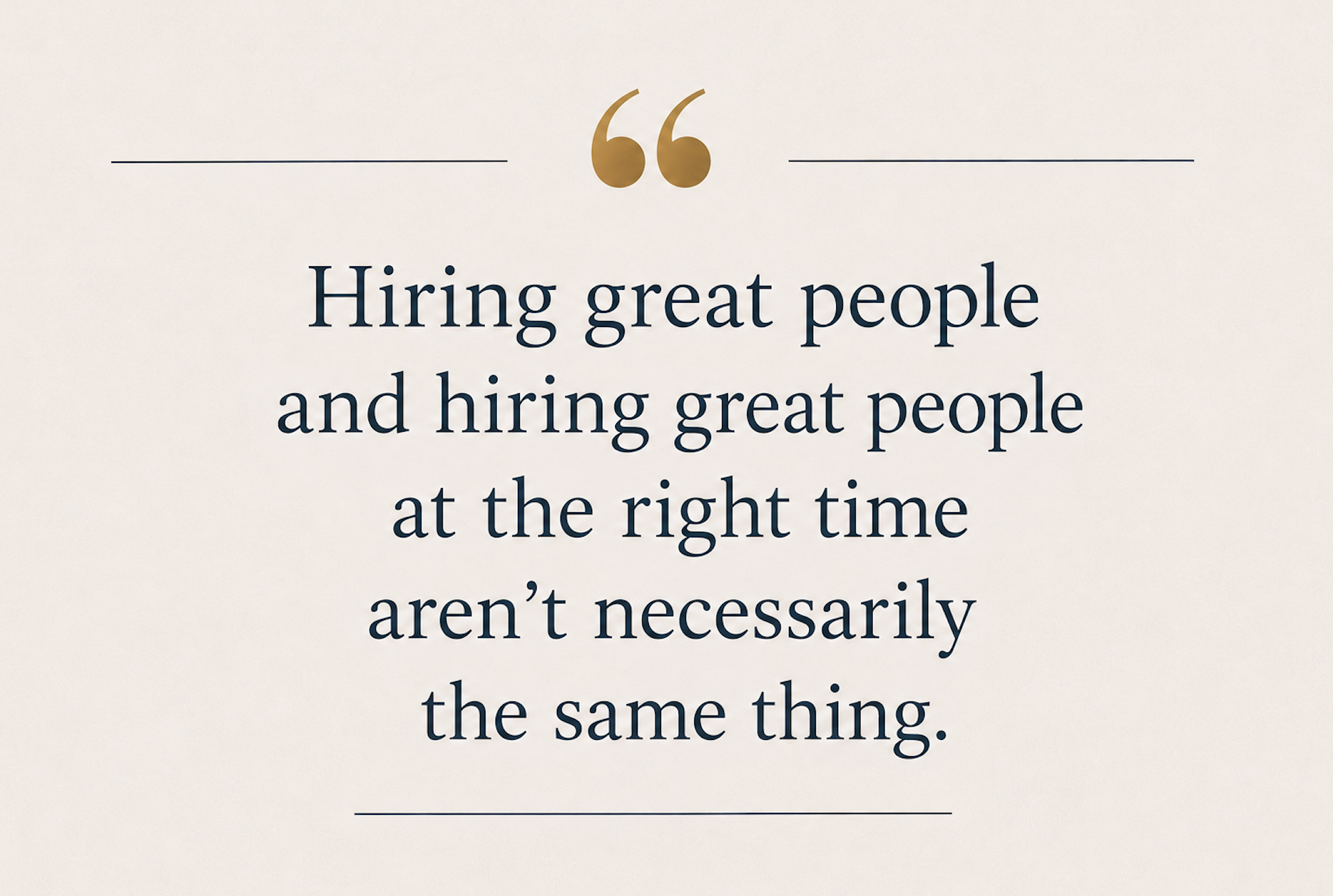
That’s been a good reminder for me that hiring great people and hiring great people at the right time aren’t necessarily the same thing. It’s tempting to build ahead, especially when you’re excited about what a business could become. You want the leadership, systems, and infrastructure in place so you’re ready for that growth when it comes. But every one of those decisions adds fixed costs today based on an outcome you’re expecting tomorrow, and tomorrow doesn’t always happen on the timeline you planned.
If I were making the decision again, I’d spend more time asking what leadership the business truly needs right now and what can wait until the business has grown enough to support it. That doesn’t mean thinking small or avoiding investment. It means being realistic about the stage the company is actually in and allowing the leadership structure to grow alongside the business rather than too far ahead of it.
We Were Building Different Companies
Of everything we’ve worked through over the last nine months, this may be the biggest lesson for me. We didn’t have enough alignment from the beginning around what we actually believed this company could and should become. I had a pretty clear vision for it. I saw an opportunity to build a luxury brand that was highly customized, design-oriented, high-touch, and known for the quality of both the product and the customer experience. But the leadership team didn’t necessarily see the same company I did.
At different points, there was a desire to take the business in a more mainstream direction or even compete as a lower-cost solution. There’s nothing inherently wrong with any of those strategies. The problem is that you can’t really pursue all of them at the same time. A luxury brand and a cost-competitive brand require very different decisions about who your customer is, how you price, where you invest, who you hire, and even how you think about growth.
When ownership and leadership aren’t aligned on that bigger picture, you can have really smart people making perfectly reasonable decisions and still end up moving in different directions. I think that’s part of what happened here. We spent a lot of valuable time trying to work toward alignment after the acquisition when, looking back, we should have done much more of that work before we ever closed.
If I were approaching this again, I would spend considerably more time talking with the leadership team about what we actually believe we’re building, not just whether we think it’s a good business or a good opportunity. Where are we taking it? Who do we want to serve? What do we want to be known for? And do the people who are going to lead the company genuinely believe in that direction? You can adjust the strategy along the way, but it’s very difficult to execute well when you’re starting with different ideas of where you’re trying to go.
Alignment on the destination matters before you start debating the route.
The 12-Month Plan We Should Have Had
Another area I would approach differently is the planning we do before stepping into an acquisition. I would want to go in with a much clearer 12-month plan. Not because I expect everything to go according to that plan because it won’t. You can spend months studying a company and still uncover issues once you own it that you couldn’t fully see from the outside. Customers leave, employees make changes, equipment breaks, and assumptions you felt pretty confident about during diligence turn out to be wrong. That’s just part of owning and operating a business.
The value of having the plan isn’t that you follow it perfectly. It’s that the process of building it forces everyone to have some important conversations before day one. What are we actually trying to build? What are the first few things we need to accomplish? Where are we willing to invest, and just as importantly, where aren’t we? What should this business look like in 90 days, six months, and a year?
Looking back at this acquisition, I think having those conversations earlier would have surfaced some of the differences in how we saw the business and forced us to work through them before we were in the middle of operating it. We still would have encountered surprises, and the plan absolutely would have changed along the way, but at least we would have started from a shared understanding of where we were going and how we intended to get there.
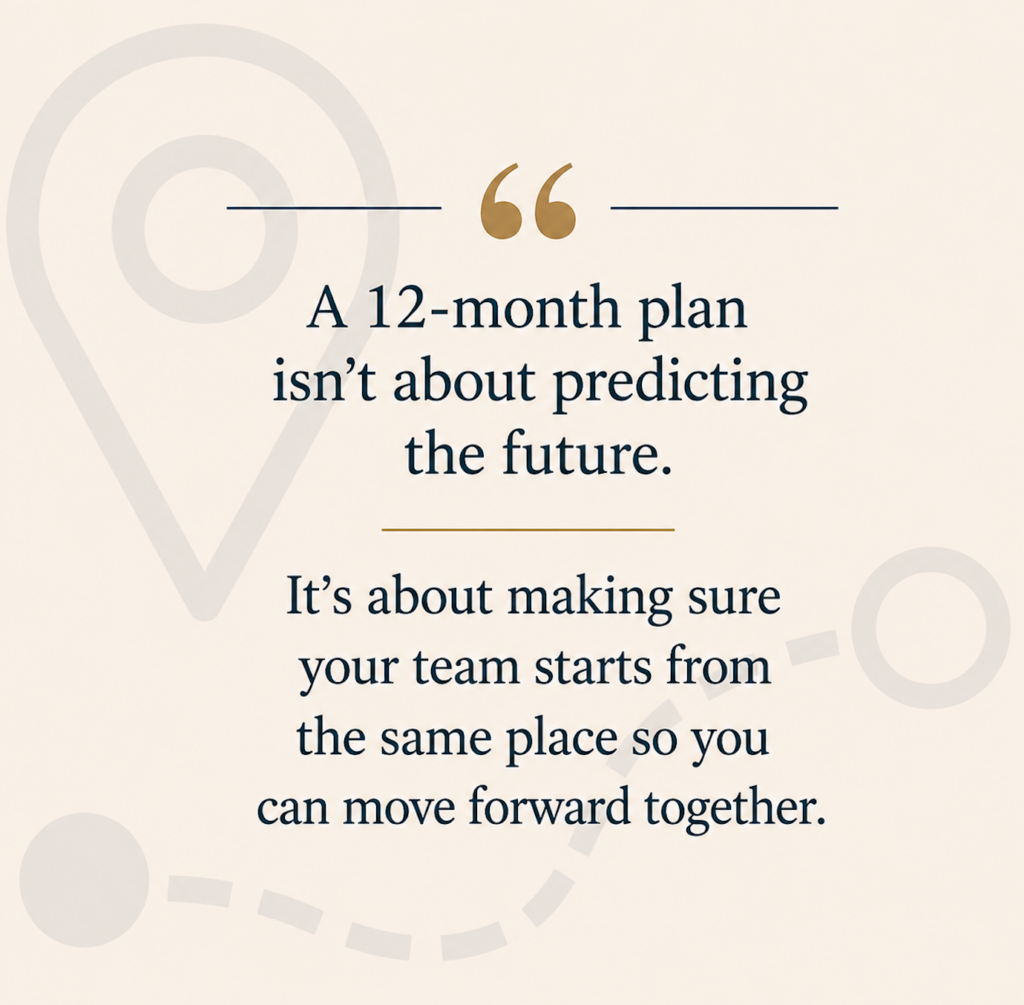
For me, that’s really the value of the 12-month plan. It isn’t about predicting what will happen. It’s about making sure the people responsible for executing it are starting from the same place.
What Diligence Can’t Always Show You
None of this changes how important diligence is. Financial analysis, customer conversations, inventory analysis, leadership assessments, operating plans—we’re still going to do all of those things. In fact, this experience will probably make us more thorough in several of those areas going forward. But it has also changed the way I think about what diligence can realistically tell you before you own a business.
You can spend months studying a company, asking questions, reviewing financials, and trying to pressure-test your assumptions, and there will still be things you don’t fully understand until you’re the one responsible for running it. That’s not an excuse for missing something you should have caught, and there are definitely things in this acquisition that I believe we should have seen more clearly. But I also don’t think the answer is believing that enough diligence can somehow eliminate every unknown. I’m not sure that’s possible.
What I want to get better at is identifying the assumptions that matter most and understanding what happens if we’re wrong about them. What if the largest customers don’t stay? What if the business needs significantly more working capital than we expect? What if growth takes twice as long? What if the leadership team isn’t aligned around the direction of the company? Those aren’t necessarily reasons to walk away from a deal, but we need to understand what each scenario would mean for the business and whether we’re prepared for it.
In this acquisition, customer retention, working capital, leadership structure, and strategic alignment all became more consequential than we anticipated. Some of those risks we could have understood better beforehand, and others became clearer once we were actually operating the company. Either way, they’ve changed the questions I’ll ask and the assumptions I’ll challenge the next time we’re evaluating an opportunity.
The Next 90 Days
Right now, we’re still in the middle of this. We have a 90-day plan we’re working through, and at the end of it we’ll have to make a decision about whether we continue investing in the business and give the turnaround more time or whether we decide it’s time to stop. I don’t know yet which direction we’ll go, and neither option is particularly easy.
There are ten employees and families affected by that decision, which makes it much more personal than looking at an investment on a spreadsheet and deciding whether the numbers still work. We want the business to succeed. We want to protect the jobs we’ve helped create and preserve the legacy that existed before we became involved. But at some point, we also have a responsibility to be honest about what is working, what isn’t, and whether putting more time and capital into the business can realistically change the outcome.
That’s where stewardship gets difficult. Sometimes stewardship means continuing to invest when the path forward is hard but you still believe there’s a path. Other times, it may mean recognizing when continuing to invest isn’t the responsible decision anymore. We’re still working through where that line is with this company.
I don’t know how this story ends, and I actually think that’s an important part of sharing it now. These lessons aren’t coming from a case study we’re looking back on several years later. We’re learning them while we’re still making decisions, working through the challenges, and trying to determine the best path forward.
Whatever happens over the next 90 days, this experience has already changed how I’ll approach our next acquisition: the questions I’ll ask, the assumptions I’ll challenge, and the conversations I’ll make sure happen before we close.
tKW Capital partners with founder-led businesses with a focus on long-term growth, thoughtful stewardship, and building companies that last. We believe the right capital should strengthen what a founder has built while creating opportunities for the people and communities around it.
If you’re considering what comes next for your business and would like to start a conversation, schedule a call with us here.