For business owners thinking about what their company becomes and who carries it forward after them.
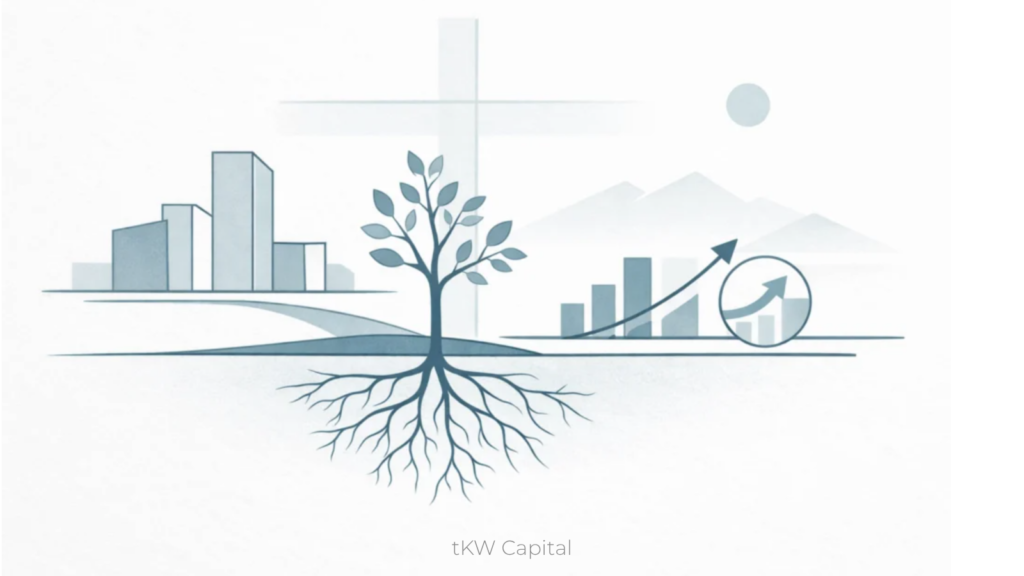
Profit matters. It just doesn’t tell the whole story.
A lot of the investment world looks at a business through numbers—spreadsheets, multiples, timelines.
And those things matter.
But it’s never just that.
There are people behind it.
Families connected to it.
Years of decisions, pressure, and responsibility that don’t show up on a balance sheet.
For many owners, that becomes clearest when they start thinking about what comes next.
The Question Behind the Exit
We’ve spent time with owners who have built something meaningful over decades.
Not just financially, but culturally.
They care about their people.
They care about how the business operates.
They care about what it stands for.
And when they start thinking about a transition or exit, the question usually isn’t just, “What is this worth?”
It’s:
“What happens to everything we’ve built?”
Will the next owner treat people the same way?
Will the culture hold?
Will the values carry forward—or disappear?
That tension is real, and it’s often what keeps people from moving forward.
Why We Started TKW Capital
We started TKW Capital because we believe there’s a gap in how businesses are built, grown, and transitioned.
Most models separate faith and work.
They treat faith as something personal—and business as something purely economic.
We don’t see it that way.
We believe the way you run a business—how you lead people, make decisions, and think long-term—is directly shaped by what you believe.
And when those things are aligned, it’s not a limitation.
It’s a strength.
A Different Way to Think About Growth
There’s a common assumption that bringing faith into business makes things softer—less competitive, less driven.
We’ve seen the opposite.
Clarity of purpose tends to sharpen decisions, not slow them down, and long-term thinking creates more stability, not less.
And when people are treated with dignity and responsibility, they tend to operate at a higher level.
This isn’t about adding something on top of the business.
It’s about how the business is run at its core.
Where It Shows Up First
One of the things we’ve noticed over time is that when something is off in a business, it rarely starts in the numbers.
It shows up in other ways first.
Decisions get harder.
Priorities feel less clear.
Things that used to move quickly start to stall.
The numbers eventually reflect it, but they’re not where it begins.
We think of stewardship less as a concept and more as a way of paying attention early, before things start to compound.
People Are Not a Line Item
Most firms talk about headcount in terms of efficiency.
We think about people differently.
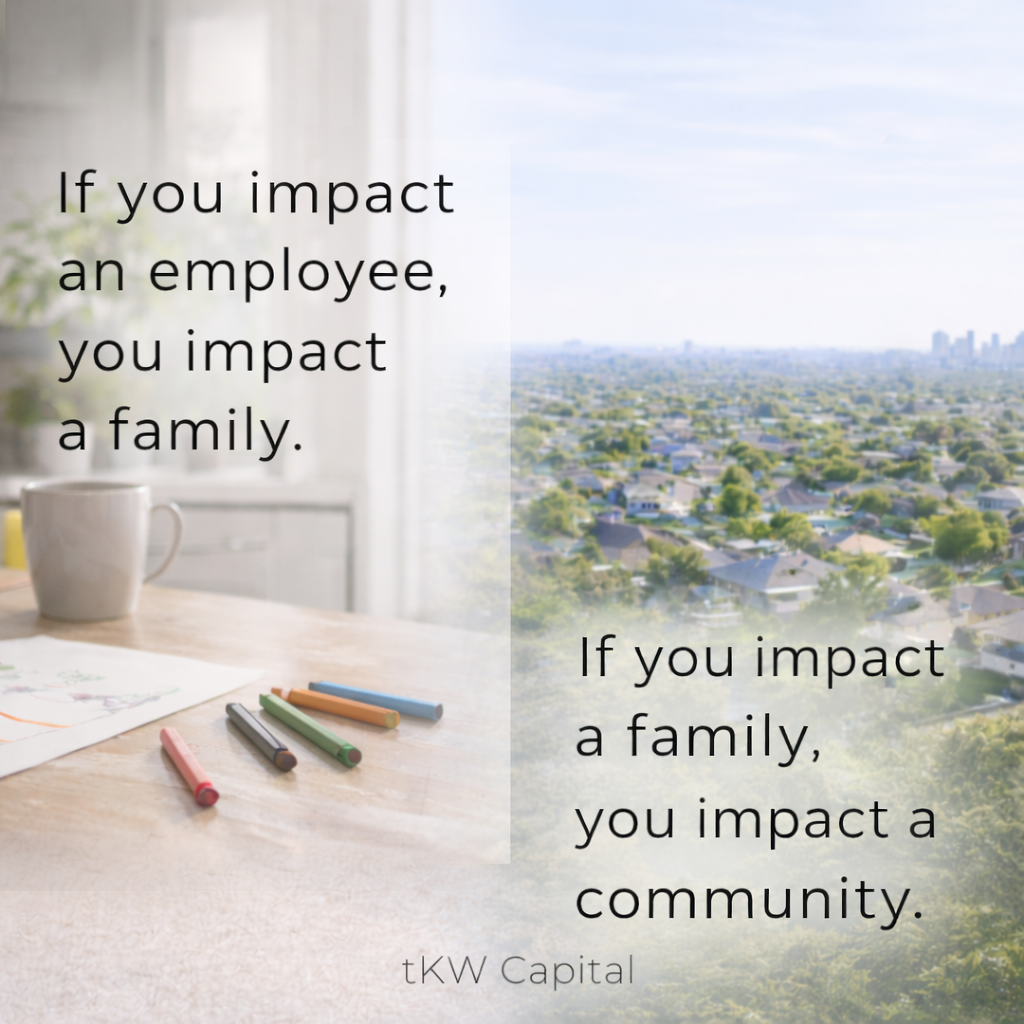
If you impact an employee, you impact a family.
If you impact a family, you impact a community.
That’s not abstract—it shows up in how people work, how they lead, and how they carry responsibility outside the business.
When people are aligned, supported, and part of something meaningful, the business tends to follow.
For Owners Thinking About What’s Next
If you’re a business owner thinking about transition—whether that’s soon or years down the road—you’re probably weighing more than just valuation.
You’re thinking about:
- your people
- your culture
- what continues after you step away
That’s not something most traditional models are built to preserve.
We approach it differently. We’re not looking for quick exits or short-term gains. We’re looking to build on what’s already been created—with alignment, continuity, and a long-term view.
What This Means for You
If you’re trying to integrate your faith and your work, you’re not the only one.
A lot of people feel the tension between building a strong business and staying grounded in what matters—it’s just not something that gets talked about often.
And if you’re starting to think about what your business becomes without you, that’s a conversation worth having sooner rather than later.
A Different Kind of Partnership
We’re not just focused on transactions, but on alignment.
Businesses where people matter, where long-term thinking is part of the approach, and where faith shapes how decisions are made.
If that resonates, it’s worth slowing down long enough to pay attention to it.
If you want to talk through what that could look like in your business, we’re here—we’d be glad to be part of that conversation.
Because what you’ve built matters, and what comes next does too.